Friday, March 29, 2013

my vatika coconut oils

Posted by Yahya at 6:41 PM 1 comments
Coconut oil is one of the most popular, if not the most popular, hair oil used by healthy hair journey girls. Why? Coconut oil is commonly mistaken as a moisturizer, but in reality oils can not moisturize the hair because oil is not water soluble. How can something that doesn't contain water moisturize the hair? Moisturize means adding moisture--the presence of water. The reason coconut oil is commonly confused as a moisturizer is because of it's unique properties. Out of all the oils, coconut is the most penetrating and nourishing, the closest thing to an oil being moisturizing.

Another unique benefit of coconut oil is its ability to retain the protein in hair. This is great for anyone with chemically treated hair. This is because protein is lost during chemical processes, especially with hydroxide relaxing. Regular protein treatments must be done in order to restore our hair's keratin and using coconut oil helps make the protein fillers last longer.

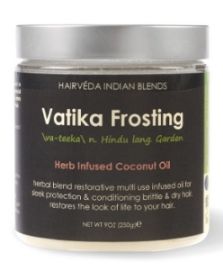
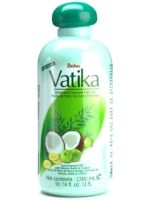
There are two brands of coconut oil I use: Dabur Vatika Coconut Oil and Hairveda Vatika Frosting.
vs. 

DABUR VATIKA REVIEW: You can say that Dabur Vatika is the original, because Hairveda's was created as an alternate and improved version made for afro textured girls. Dabur Vatika is an Indian hair oil that can be found at almost any Indian market. It's made with a ton of ayurvedic goodies like neem, brahmi, amla, henna, milk, rosemary oil, and lemon oil. This coconut oil is also known for it's distinct smell. To me, it smells like a coconut soap. While it bothers some it doesn't bother me at all. I quite like it! It smells natural--not like a coconut fragrance, but actual coconut. Dabur comes in different sizes, but I usually get the one like in the picture above.

In room temperature coconut oil is solid. how do they expect you to get a solid out of a bottle? The Dabur bottle is microwave safe so that the oil can easily be heated and turned to liquid. I usually heat mine for 15-20 seconds, more if I'm doing a hot oil treatment. The Dabur Coconut Oil I mainly use as a hot oil treatment and prepoo ( before shampooing treatment ). Everyone's hair responds to products differently, and I believe my hair likes it better as a hair treatment and with heat rather than as a sealant. I also like the application of the bottle. it's made so that the oil comes through a tiny punctured hole. This is good because a little oil goes a long way. I only need a drop or two of oil to lightly coat my strands, and that's coming from someone with a lot of hair. The other, more important reason I like the bottle is because it works as a dropper so I can pour it directly on my hair without it getting messy. Putting product directly on your hair, rather than from your hands, has a better effect. I can always feel the difference. This is how I see many girls of Indian heritage oil their hair.


VATIKA FROSTING REVIEW: Hairveda's Indian inspired products are more suitable for dryer and curler hair types. Like Dabur it's completely natural and made of ayurvedic goodies, like amla, henna, and lemon. Unlike Dabur Vatika their container is in a jar and not microwavable safe. But there is no need to heat it, just take a scoop of the solidified oil with your finger and lightly spread it in your hand before your hair. It will melt instantly due to your body temperature. Also the smell is greeeeat! It smell's like homemade cake frosting! One of my best smelling hair products. All of Hairveda's products have great smells. and also like Dabur Vatika, a little goes a long way. I've been using the first jar I bought for more than a year now, maybe even two? It also lasts longer than my Dabur Vatika. but that might be because I use it as a sealant rather than for oil treatments, and treatments take more product. Though I might use Dabur as a sealent when I need something lighter or when my hair is getting too shiny, I prefer Vatika Frosting as a daily sealant because it gives my hair more shine and moisture retention.


inspirational hair videos

Posted by Yahya at 12:42 PM 1 comments
here are several youtube videos I admire and watch when I need some hair motivation, enjoy!

Patience Hair Commercial

You Can Shine

Whip My Hair ( acoustic version )

I Love My Hair

Hairy Tale


conquering protein overload

Posted by Yahya at 10:59 AM 8 comments
when trying to conquer protein overload the best battle strategy is to only use moisturizing products with no trace of protein. It took me a while to realize many of my moisturizing products, and even shampoos, had traces of protein. I also didn't want to spend a lot of money, so I tried getting the most effective and cheapest products I could. below I've listed how I changed my regimen to combat protein overload, listed from the most helpful.


PRODUCTS
  • Hairveda Whipped Ends 
    • very good leave-in, a little expensive with shipping, especially if you're buying it alone. the shipping for american residents is about 7 dollars.
  • Hairveda Sitrinillah
    • also very good, but can be expensive with shipping like the whipped ends.
  • Aubrey Organics Honeysuckle Rose 
    • also kinda expensive, but it was the most effective in reversing my protein overload. I used it as a deep conditioner and diluted it to use as a leave-in to stretch the dollar. this is also easier to get, usually found at your local vitamin shoppe. 
  • Queen Helene Cholesterol 
    • has mineral oil, but was very helpful. breakage is associated with protein overload because the hair is stiff and has little elasticity, but cholesterol helps restore elasticity. one thing that people may not like though, is that it has a distinct smell. to me, it smelled like the ferret shampoo I use to bath my ferret with. so I actually liked it because it brought back memories! 
  • Honey & Molasses 
    • cheap ingredients to add to conditioners to give them a moisture boost.
  • Mane n Tail Detangler 
    • helped detangling, because protein overloaded hair tends to stick together, making it knot easily. I only used it a couple days before washing because it has cones, which will not mix good with protein overload if there is a build up. 
  • Suave Almond & Shea Butter 
    • simple cheapie conditioner with no protein
REGIMEN
  • deep condition or co-wash once a week with steam 
    • helps the conditioner to penetrate the barriers of protein. I used the steam from my college's steam room and sauna.
  • clarify (with castile soap and jojoba oil) every two weeks 
    • clarifying dries the hair, but it also gets rid of the traces of protein product coating your hair. product build up is also not a good combination with protein overload. the castile soap also opens your hair's cuticles to take in moisture better. just make sure to close them back afterwards. 
  • final apple cider vinegar rinse 
    • to keep the hair's ph balance stable since I could no longer us roux ph corrector, which has protein in it. this also helps to keep the scalp clean when co washing and seals in the moisture after deep conditioning and using castile soap.
  • baggying & wet bunning
    • baggying excessively is one of the top things that really helped me. if I didn't do excessive baggying and wet bunning I'd still have protein overload ( wet bunning is when you bun your hair after washing and conditioning it, so that the hair stays wet and moist longer ). what finally got rid of my last traces of protein overload was when I left a bag on for 3 days in a row! with a good leave-in 
  • protective styling 
    • I kept my hair in braids (at least 8 total), and later twists. I found the twists worked better from keeping my hair from tangling. I also kept them in the shower because that's when my hair would really tangle. the only times I took them out was to detangle and moisturize my hair. 
THINGS I LEARNED
  • not to pile your hair with moisturizer or conditioner, because that just creates build up. being light handed and not heavy handed is more effective. 
  • stay far away from all protein ingredients, even if it's a little bit. especially from any hydrolyzed protein, which means the protein is small and molecular so it can penetrate the hair better. 
  • stay away from coconut, avocado, and banana ingredients, especially as a leave-in. coconut helps keep the protein in you hair, and all of them have little traces of protein. 
  • don't use any ayurvedic powders like amla, shikakai, and henna, because they all have strengthening properties like protein. 
  • extra virgin olive oil and grapeseed oil are the best oils to seal with. especially with relaxed hair because they're light, but penetrating.


Sunday, March 24, 2013

apple cider rinse

Posted by Yahya at 1:00 AM 0 comments
MY RECIPE:
2 CUPS water
1 CUPS rose water
4 TBSP apple cider vinegar
1 TBSP any oil
1 TBSP honey

DIRECTIONS: Rinse out regular or deep conditioner out 50-70% then pour apple cider rinse throughout hair, making sure all of it gets saturated. Also be sure to get the scalp as it gently cleanses and restores the ph of the scalp. Leave in for a couple minutes, then half rinse out. Dry hair as usual.


REVIEW: This has had great results on my hair, the main benefit has been shine. Apple cider has a low ph, so it seals the cuticle and traps moisture in the hair strands. But remember, it's not good to do it too often. Apple cider has clarifying-like affects, so it can cause dryness when used too frequently. I started experiencing this when I was doing this every time I washed. My hair was not necessarily becoming dry, but I was no longer getting the same effects I once was. I've also read that using a ACV rinse as a final rinse leave-in will have a better effect on your hair. I've yet to really try that, the most I have done is rinse it out un-thoroughly so that some of it remains in my hair. I would think that using an apple cider rinse as a leave-in would also lead to dryness, and that an aloe vera juice leave-in would be a better substitute since it also has a low ph of 4 and with moisturizing properties. but I can't say because I have not tried it yet.

homemade castile shampoo

Posted by Yahya at 12:52 AM 1 comments
RECIPE:
2 TBSP dr. bronner's castile soap
1 TBSP jojoba oil ( or olive oil )
3/4 CUP water
4 TBSP rose water

 DIRECTIONS: pour over hair like a rinse, letting it soak down and throughout the hair. follow up with a conditioner. castile opens the hair's pores for better deep conditioning, so it's best to finish off with an apple cider rinse, which also has slight clarifying properties, or roux ph corrector so that the pores close back.


REVIEW: the kind that I've used is the liquid peppermint one. they also have one already mixed with rose water, which I might try in the future. I add rose water to my mix as a light moisturizing ingredient. but the peppermint one is nice with a tingling feeling. castile soap is the only natural and sulfate-free shampoo that deeply clarifies hair. usually to really clarify hair sulfate ingredients are needed. even with the peppermint, high ph, and clarifying properties, when mixed properly castile soap isn't drying at all. my hair would feel very good after shampooing with this.

according to the label, the Dr. Bronner's Castile Soap is made of... water, coconut oil, potassium hydroxide ( none remains after saponifying oils into soap and glycerin ), olive oil, hemp oil, jojoba oil , peppermint oil , mentha arvensis extract, citric acid, tocopherol

even if it makes your hair feel nice, castile shampoo should not be used too frequently, at least a month gap. this is not only because castile shampoo is a clarifier, which can dry hair, but because it has a very high ph of 9. this is the reason people with natural curly textures notice their curls lay down more. when using castile shampoo, it's best to take advantage of the open cuticles with a great protein deep conditioning before using a ph corrector, like Roux Porosity Control. if your hair is normal or high porosity, it would help for you to know that protein treatments are more effective when the cuticles are lifted because the molecular protein can enter the hair strand easier. castile shampoo is even better for hair that naturally has a low porosity since it opens the cuticles so moisture can enter easier, and does not sit on top of the hair strands.


black henna gloss ( without indigo )

Posted by Yahya at 12:48 AM 0 comments
INGREDIENTS:
  • 2-4 TBSP henna 
  • 4 TBSP cheapie conditioner 
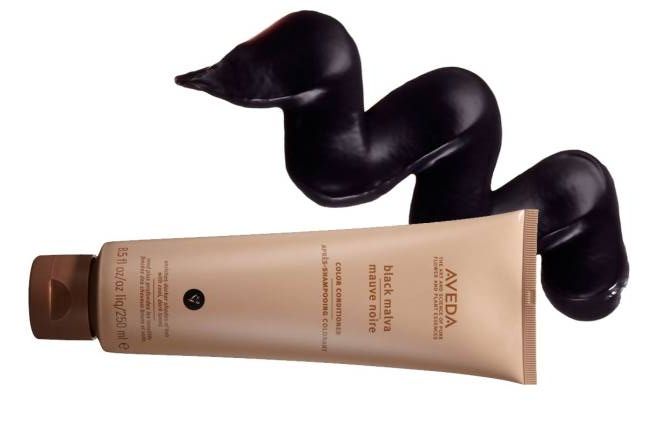
  • 1-2 TBSP aveda black malva 
  • 2 TBSP vatika coconut oil 
  • 3 TBSP honey or molasses 
  • rose water (optional) 
DIRECTIONS:
  • Detangle, dampen, then oil hair. 
  • Mix 2 tbsp of henna with cold (rose) water in plastic container until the consistency turns pudding like. ( Do not use metal utensils ) 
  • Add conditioners, oils, molasses and honey. 
  • Put on old t-shirt and gloves; and apply to hair immediately. 
  • Pile hair on head and put on plastic cap. 
  • Sit under dryer for 30 minutes on moderate setting, or let it sit on hair for 1-2 hours. 
  • Rinse out and condition, rinse out and condition. Gloves still on. 
  • Follow with deep conditioning. 
  • Clarify hair following week or wash. 
STORAGE:
Henna paste can freeze, but for better color deposit.


PRE-REVIEW:
After doing ALOT of research I finally found a way to darken my hair with a gloss and without having to do a two step with indigo. Thanks to LadyChe, a member that of LHCF who shared the idea. Aveda black malva is a natural conditioner that darkens hair. It's on the expensive side if used alone, but it's life gets extended when using as an ingredient in a glass. I can finally stop looking for hendigo glosses that go darker than dark brown, which doesn't seem to exist. Plus the conditioner diminishes red tones, making it a good match with henna. 

I have yet to try this, so stay tuned.


hair porosity

Posted by Yahya at 12:39 AM 13 comments
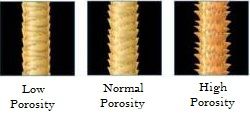
I know this has been explained before, but I thought I'd explain it in detail since it seems some people are confused about it. first of all, I see some people saying their hair is unhealthy because it has low porosity. that is incorrect. hair that has low and normal porosity are healthy. hair that is high in porosity is unhealthy. another thing that I find girls teaching, which isn't exactly true, is that low porosity hair and protein overload go hand in hand. they are two different things because hair can have protein overload and a high porosity at the same time. just doing protein treatments can help smooth the cuticle, but it won't bring high porosity hair to low porosity hair by itself. so just remember: protein helps porosity, porosity doesn't help protein. also, not all proteins help porosity, you have to look for specific kinds of proteins. I was confused about this once, too.


low porosity - hair that isn't very porous has smooth cuticles that water doesn't enter in easily. but when moisture does gets into the cuticle, it will be shut in resulting in long lasting moisture. this kind of hair is usually shiny, but it is resistant to chemical treatments like dye and relaxers. low porosity hair does not need cones or much protein either, you can get protein overload easily. low porosity hair will benefit from natural high ph products, like Castile Soap, Baking Soda, and Bentonite Clay. many low porosity haired girls have also have had success with Giovanni 50/50 Balanced Moisturizer.

normal porosity - this kind of hair can be thought of as being balanced. it can absorb a fraction of water, but is not overly porous. moisture can get in the hair strands and last. unlike low porosity hair, it can take chemical treatments okay, but you should keep it mind that over time the hair will become more porous by doing so.

high porosity - think of chemically processed hair that isn't being properly taken care of. this hair is damaged and has lots of holes in the hair shaft. these holes are like a sponge and absorb water easily, but this does NOT mean it's better for moisturizing. just as quick as the moisture comes the moisture goes. think of the hair strand as a house made of doors. with high porosity hair all the doors are open, making it unsafe for the cortex and insides of the cuticle. this type of hair does take in chemicals better, but it's not suggested because you'll just end up with even more damaged hair.


relaxed and chemically treated hair has a natural high porosity, but regular use of products such as Roux Ph Control, Aloe Vera Juice, and Apple Cider Vinegar will combat this and restore hair to normal porosity. proteins that coat the cuticle and oils will also help. note that oils help smooth the cuticle, but this is not due to ph. oils are not water soluble so they do not have a ph.

now that we understand the levels of porosity lets talk about the test. many of us hair fanatics know about this test. you divide your hair in four sections and take a shed strand of hair from each. this is because one section of hair might be healthier then another section. then you put the strands of hair in a tall cup or bowl and see if it floats. if it floats for a while it's healthy. here's what you should do for more clear results. see if your hair floats for at least 15 minutes. if it does then your hair is alright. if it doesn't it has high porosity and you have to up on your ph correctors. if you come back in an hour (with occasional checks in between the hour) and it's still floating, congratulations! your hair is in very good condition. now push down the strands and if they float back up (be patient!) your hair has low porosity.
______________________________________________________
here is an article that further discusses the science of hair porosity:
The "Other Path" to Moisture, by Joe Parker
______________________________________________________

here are some of the tips for low porosity hair that's explained in the article:
  • If a product will hydrate your fingers then it will moisturize low porosity hair. 
  • Adding a tiny amount of castile soap to your deep conditioner will boost it because it will lower the overall surface energy of the water system. 
  • To boost your leave-in or rinsable conditioner, heat it up and apply it to your hair at an elevated temperature: 30 to 40 C. 
  • Hydrolyzed rice, silk and wheat proteins have a molecular weight, making them better for low porosity hair.

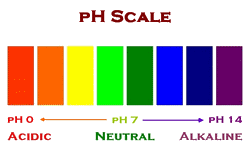
ph higher than water equals higher porosity, and ph lower than hair equals low porosity. so to finish it all off, here are some recorded ph levels of hair related things:
  • 14 sodium hydroxide (lye) 
  • 13 bleach
  • 9-11 calcium hydroxide & guanidine hydroxide (no lye)  
  • 9-11 permanent dye 
  • 8.9 castile soap
  • 8-9 bentonite clay
  • 8-9 ammonium thioglycolate (chemical used in perms)
  • 8-9 semi permanent dye                       
  • 8-9 baking soda 
  • 8 sea water
  • 7 pure tap water
  • 6 milk
  • 5-6 tea
  • 5 soft drinking water
  • 5 hair 
  • 4-5 coffee
  • 4.25-5 apple cider vinegar 
  • 4.5 roux porosity control
  • 3-5 aloe vera juice 
  • 2 lemon juice


kimmaytube leave-in

Posted by Yahya at 12:32 AM 1 comments
INGREDIENTS:
2 TBSP hairveda's whipped ends (or any conditioner)
2 TBSP trader joe's spa conditioner (or any conditioner)
4 TBSP aloe vera gel
2 TBSP shikakai cocasta oil
1-2 TBSP jojoba oil
water until desired consistency.


REVIEW: deciding I wanted to stretch my products and use a more liquidy conditioner, I decided to try the kimmaytube homemade leave-in. it's usually used on naturals and used as a leave-in. I use it as a a leave-in and moisturizer. for relaxed heads, it's best to cut the recommended amount of oils in half, like I've done in my recipe above. due to the low ph of the aloe vera juice, or gel, it has good porosity correcting properties. I've been using this a couple months now, and it's been great! my hair feels softer and looks shinier. since it's liquidy, it also doesn't give my hair that greasy, laid down look at the end of the week due eo product builds up.

For those of you who don't know, Kim Love, the inventor of this recipe, is a very popular natural hair guru. Click here to go to her youtube channel called Kimmaytube.


hair symptons

Posted by Yahya at 12:03 AM 2 comments
Conquering protein overload has provided me with more understanding and hair experience... but it also left me with a lot of broken strands. When I first began experiencing protein overload, I could not properly evaluate my hair, resulting in me worsening my overload. On hair care forums, I now see that other people also getting confused when trying to figure out what was wrong with their hair. So now I'm going to list a clear description of the symptoms that associate protein overload, moisture overload, low porosity, and high porosity. Everyone's symptoms can be a little different since everyone's hair is different, or their problems can be slightly different. I can only describe from my experience and knowledge, but at the same time the characteristics of each problem would still be relatively the same, just might not hit the bull's eye.
____________________________
you might also want to read about
hair porosity
____________________________


PROTEIN OVERLOAD is characterized by dry and hard hair. When moisturizing and conditioning, your hair will feel very soft and moist. It will take a while for your hair to dry, but once it dries it becomes very hard. In my experience, the outer cuticle layer is what felt dry and hard, but the inner layer still felt somewhat moisturized. With breakage, the hair snaps rather then stretches out, due to the small amounts of elasticity in the hair. A good way to tell the amount of elasticity in your hair is by doing the elasticity test. This is when you wet a broken hair strand, tie each end around your index fingers, and slowly stretch the strand and observe how it snaps. ( Does it stretch 50 percent and snap? Or does it just snap right away? ) The hair also gets harder to detangle because the strands tend to stick to each other. It's caused when too much protein in their hair. Once your hair health is stable, completely avoiding protein products forever isn't the answer. Just remember protein treatments are something you only really have to do when you notice you hair is getting too soft or when you notice extra breakage.

 MOISTURE OVERLOAD is characterized by very moist hair that stretches too much, resulting in breakage. The hair will feel too soft and mushy. Evaluating this is the easiest because it's symptoms is not like the other hair issues. Also, moisture overload is suppose to be very easy to fix, needing only one or two protein treatments to correct. It's caused when someone is doing too much conditioning to their hair without using protein to balance it.

LOW POROSITY is associated with smooth cuticles that shine, but where water can not enter easily. Depending how much water the strands absorbed determines how long it'll take for the hair to dry. When water is absorbed properly the hair will take a long time to dry. If water isn't absorbed properly the hair will dry fast. And when moisturizing the hair, product has a hard time entering, usually resulting in cream laying on the strands. Hair can naturally be low porosity or low porosity can be obtained from using ph correcting products too often. This one doesn't mean your hair is un-healthy, it means you have to adjust your practices to accommodate for your hair condition.

 HIGH POROSITY acts like a sponge. moisture can easily enter, but easily exits. When the hair dries it dries, and quickly. Hair cuticles will feel dry and also feel rigid, not smooth. A good way to figure out porosity is to do the porosity test ( see how long a strand of your hair floats in water, see link above for details). Hair that is very high porosity is usually malnourished. High porosity hair is the natural structure of her that has been chemically treated. How much the cuticle's 'scales' have lifted depends on how high on the ph scale the chemical used is. Relaxers are probably the highest, being made from a chemical with a ph of 14. Regular use of ph correcting products must be used to combat this.


MY EXPERIENCE
When I first began experiencing protein overload, I thought I was suffering from low porosity symptoms from using Roux Porosity too often, so I stopped using it. I also did the porosity test, which told me my hair's porosity was low. I began changing my regimen in order to combat this. I was clarifying with baking soda to lift my hair cuticles, over moisturizing my hair with baggying and steaming to try to force the moisture in, and avoiding my protein products. For a while my hair felt like it was slowly getting better, but then that stopped and it was getting worse again! I did another porosity test and my hair had gone from low porosity to high porosity! But why was my hair still suffering and acting strange? That's when I realized I had protein overload. That explained why my hair had little elasticity. ^ ^'

The reason my changed regimen was kinda working for me was because I was doing more clarifying, deep conditioning, and avoiding protein ingredients. Things that combat protein overload. From this I also realized that many moisturizing products have some protein ingredients in them. When you have protein overload you want products with no protein at all. This was probably why my hair was still started getting worse.

Saturday, March 23, 2013

hello.

Posted by Yahya at 5:44 PM 0 comments
Hello! My name is Khaya, but you all can call me by my nickname, Yahya. I'm currently a college student and have been on my healthy hair for... about four years? My area of expertise is chemically straightened afro textured hair, but this blog can be appreciated by anyone who is interested in hair care. The characteristics of my hair? Coarse (large cuticle size), thick (meaning many follicles), and my hair type is in the 3b-4a area.

I'm Trinidadian American. For those of you who don't know, the majority of the Trinidadian population is of African and Indian descent, and Chinese is also in the minorities. So yes, I have mixed heritage, but if you ask me how much of what I am I won't know how to answer. Well, because there isn't a real answer. Race isn't biological, and so doesn't really work in the genetic percentages people usually give them. I'm mixed, I don't know to what extent, but that doesn't really matter because my hair is kinky-curly textured, chemically straightened, and it would have never reached this length or health if I hadn't started my hair journey.

~~~~~~~~

Why did I choose to name my blog after Pocahontas? She was my favorite Disney princess as a child and was one of my most influential role models. (I don't care if she's not real or for kids!) -Another reason was because of the belief most Native tribes held regarding long hair. Many believed long hair was more than just style, but symbolized overall health, strength, and gave them more connection with their surroundings. This is also a belief in traditional Ayurveda. Scientists now theorize that hair is in fact an extension of the nervous system. They're like antennas and make us more sensitive to the world around us.

Hair is an extension of the heart.
(When I say this, I means two things.)

I don't believe in the phrase "it's just hair"--to a certain extent. (I say to a certain extent because there a girls out there that treat hair care like a religion.) Hair is an accessory, but one that is more linked to our identity. It's not artificial like the clothes, shoes, and jewelry we wear. Our faces have the most influence on our appearance and identity, hair frames our faces and we can change it in so many ways. How we choose to wear and take care of it can tell a lot about ourselves. It a natural accessory, and it's the most defining because it's apart of us.


want to contact my privately?
facebook message me, pm on hairlista, or email me.
email address: yahyal0v3@yahoo.com

Related Posts Plugin for WordPress, Blogger...
 

pocahontas' hair secrets Copyright © 2010 Designed by Ipietoon Blogger Template Sponsored by Online Shop Vector by Artshare